

The Perfect Morog Pulao Recipe
Yield: 4 to 6 servings
Time: 1 hour 15 minutes
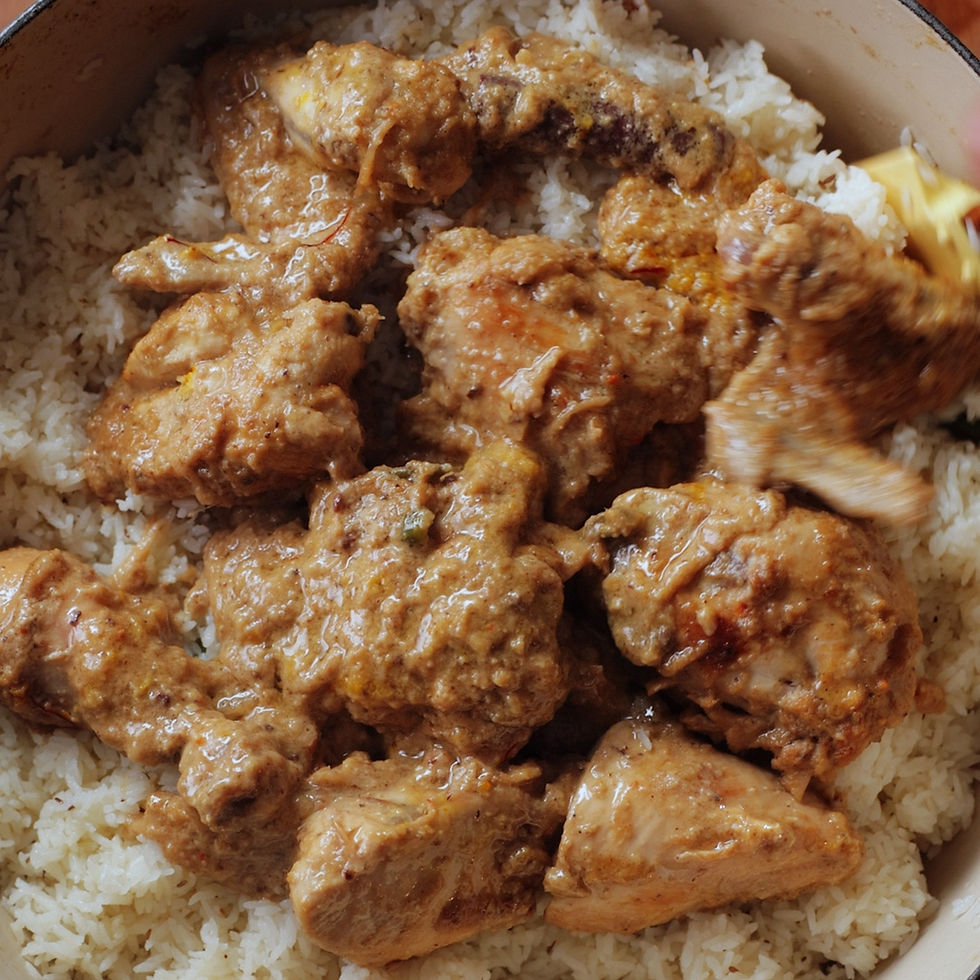
Morog Pulao is a rich, aromatic Bangladeshi celebration dish typically reserved for weddings and special gatherings. While traditional recipes often use only leg quarters and require multiple pans, this streamlined one-pot version uses a whole chicken broken down into smaller pieces for faster cooking and even flavor distribution. A deeply fragrant base of toasted warm spices, yogurt, and a smooth nut-and-raisin paste coats the tender chicken, which then infuses the delicate Kalijeera rice with rich, savory depth.
A Note on Cookware: A heavy-bottomed nonstick pot is highly recommended. Because the dish relies on a nut-and-raisin paste, it can stick and scorch easily. If using an enameled cast-iron pot, keep a watchful eye and stir frequently over low heat.
Ingredients
For the Spice Blend
1 tsp white peppercorns
½ large mace blade (or 1 small blade)
1 medium cinnamon stick
2 whole cloves
6 to 7 green cardamom pods
½ tsp freshly grated nutmeg
For the Nut Paste
2 tbsp blanched almonds
10 raw cashews
6 to 7 raisins (kishmish)
Splash of water for blending
For the Chicken & Gravy
1 whole chicken (about 3 to 3.5 lbs), cut into 10 medium pieces
½ cup neutral cooking oil
2 cups yellow onions, thinly sliced
1 cinnamon stick
3 green cardamom pods
1 bay leaf
1 tbsp garlic paste
1 ¼ tbsp ginger paste
3 tbsp plain full-fat yogurt, well whisked
6 to 7 whole green chilies
½ tsp kewra (screwpine) water
1 generous pinch saffron threads
Kosher salt, to taste
For the Rice & Assembly
4 cups Kalijeera rice (or Chinigura/Basmati), washed and soaked for 30 minutes, then drained
6 cups hot water
7 to 8 whole green chilies
3 tbsp full-cream milk powder
½ tsp shahi jeera (caraway/black cumin seeds)
3 to 4 dried prunes (alu bukhara)
¼ tsp kewra water
½ tsp granulated sugar
3 tbsp ghee
Kosher salt, to taste
Preparation
Step 1: Grind the Spices & Make the Nut Paste
In a mortar and pestle or small spice grinder, combine the white peppercorns, mace, cinnamon stick, cloves, and cardamom pods. Grind until finely powdered, then stir in the freshly grated nutmeg. Set aside.
In a small blender or food processor, combine the almonds, cashews, raisins, and a small splash of water. Blend until completely smooth. Set aside.
Step 2: Caramelize the Onions
In a large, heavy-bottomed pot or Dutch oven, heat the cooking oil over medium-low heat. Add the sliced onions, 1 cinnamon stick, 3 cardamom pods, and the bay leaf. Cover the pot and cook on low heat for 5 minutes to let the onions release their moisture and soften.
Remove the lid, turn the heat up to medium-high, and cook, stirring frequently, until the onions are deep golden brown. Lower the heat to low. Transfer half of the fried onions (beresta) out of the pot and set aside for later.
Step 3: Build the Chicken Gravy
To the remaining onions in the pot, add the garlic paste and ginger paste. Sauté for 30 to 40 seconds until fragrant. Pour in a small splash of water to cool down the pan slightly.
Add the whisked yogurt and immediately turn the heat back up, stirring continuously to prevent splitting. Stir in the prepared nut-and-raisin paste, followed by the ground spice blend and a generous pinch of salt. Sauté for 2 minutes until oil starts to separate from the sauce.
Step 4: Braise the Chicken
Add the chicken pieces and 6 to 7 whole green chilies to the pot. Sauté over medium heat for 3 to 4 minutes to coat the chicken in the paste. Stir in the reserved fried onions, ½ cup of water, ½ teaspoon of kewra water, and the pinch of saffron.
Cover the pot and cook over medium-low heat for 25 to 30 minutes, until the chicken is tender and fully cooked through. Stir frequently during this step, scraping the bottom of the pan to ensure the nut paste does not burn.
Step 5: Cook the Rice
Carefully transfer the cooked chicken pieces and about half of the gravy to a bowl; cover to keep warm.
In the same pot with the remaining gravy and pan drippings, add the drained Kalijeera rice. Stir gently to coat the grains. Pour in the 6 cups of hot water, then add 7 to 8 whole green chilies, milk powder, shahi jeera, dried prunes (alu bukhara), and ¼ teaspoon of kewra water. Season generously with salt—the water should taste seasoned, as the rice absorbs a significant amount of salt during cooking.
Bring the mixture to a rapid boil over high heat. Cook uncovered until the liquid reduces and the surface of the rice emerges above the water level. Immediately reduce the heat to the lowest setting, cover the pot tightly, and let it steam (dum) undisturbed for 15 minutes.
Step 6: Finish and Serve
Uncover the pot and gently fluff the rice using a spatula. Sprinkle the sugar and drizzle the ghee over the rice. Gently fold in the reserved chicken pieces along with any accumulated gravy.
Cover the pot again and let it rest off the heat for 5 to 10 minutes so the flavors meld before serving. Enjoy hot!


The information was organized well, especially in the parts where the writer explained one point before moving on to the next. That made it easier to understand the overall idea without feeling like too much information was being presented at once. I also liked that the article included details that felt relevant to everyday situations rather than staying too abstract. I also noticed Check Details while looking into something related afterward, and it brought me back to one of the points mentioned in the article. Sometimes those smaller details are what make a topic clearer. I think there is room to expand on that particular point with a few more examples.
Morog pulao is seriously underrated. Such a comforting dish. @paper minecraft
The information here is useful for anyone becoming familiar with router configuration. Understanding private IP addresses is a basic but important networking skill. Readers searching for 168.192.l00.1 can use this type of guidance to better understand address formats and avoid mistakes while working with their network equipment.
Drift Boss is proof that the best arcade games don't need complicated mechanics to be incredibly entertaining.
Absolutely stunning! I love how this recipe simplifies a traditionally complex dish without sacrificing any of the rich, aromatic flavors. The tips on avoiding scorching with the nut paste are so helpful. Thank you for this detailed guide!